
What Brings Them to Newark: Victor Davson in Conversation
By Lia J. Latty
Published: November 25, 2026
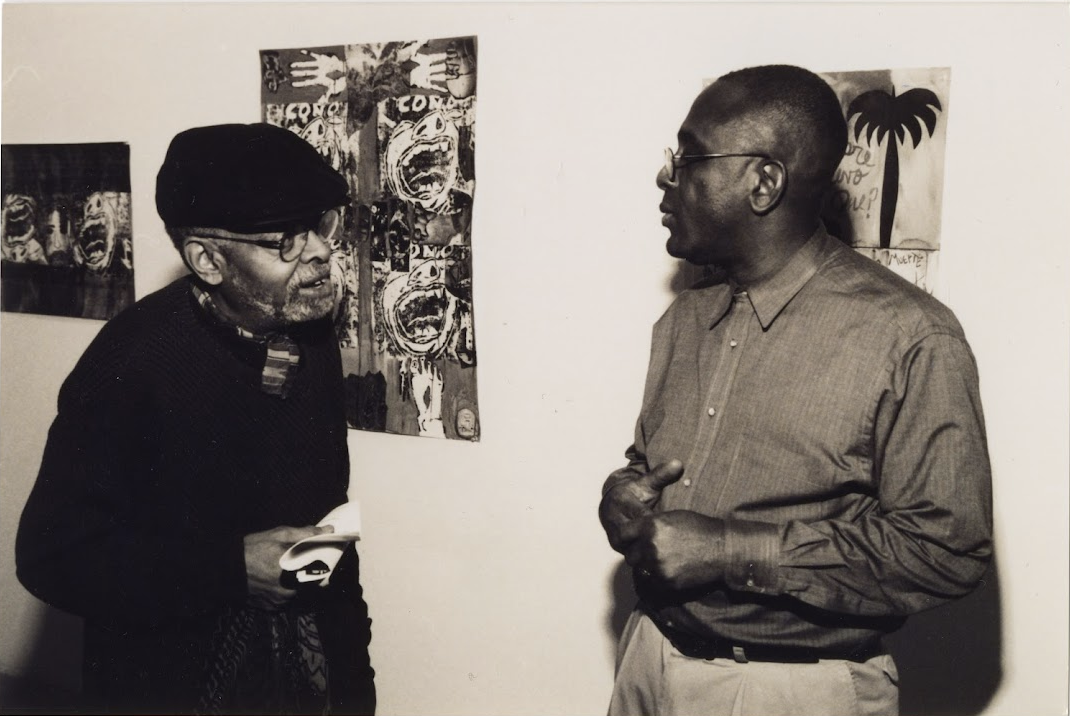
Lia J. Latty: In 1983, you answered an ad to share a studio with a group of local artists in Roseville, and within months, that studio became Aljira. When did you realize it was going to be more than a studio?
VICTOR: There was a conversation that I recall between myself and my co-founder, Carl Hazlewood. Carl and I thought that maybe we could open up the studio to the public so that they could see what we were doing. What that evolved into was not just a studio visit or a tour by the public. It evolved into an exhibition, because we invited artists who were not part of the original group to show along with us. I know this may sound like a cliché, but the rest is history. (Laughs)
That’s what really happened. It was just Carl and I. We went beyond the initial impulse, which was just to have workspace, and we thought, why not invite the community in to see what we were doing? This was a culturally underserved community to begin with. We felt that there was a need, and I think that’s the founding impulse. You recognize there’s a need in your community, and you respond to it. You don’t think about, “How am I gonna get paid?” or “How am I gonna get the information out?” You figure it out as you go. You build the plane while you’re flying it.
LIA: That is entirely true. (Laughs) That’s quite literally what I’m doing with my platform, so I completely understand.
VICTOR: I think it has something to do with who you are, with your essence. And also something to do with your nurturer, your parents or whoever. The first nurturer is important, because the first nurturer shapes us. I just think those first few months and years are foundational to who we are.
LIA: I’d agree with that.
VICTOR: And I’m saying that without even knowing your background. Even looking at your face for the first time, there’s something there that I can read. I know that there are some people behind that face who shaped you, Lia.
LIA: Well, you’re right on the nose. That’s very telling. I will say my mom has been extremely supportive of me on this journey. Not a lot of Black families or parents are when their kids decide that they want to pursue the arts. But she understood what I wanted to do and wanted to make sure that her kid would manifest their dreams. She also understands how the art world works in terms of getting your career off the ground. She has continued to stand beside me, and her support has been immeasurable in getting me to where I am right now, with my own art practice and with this platform.
VICTOR: Well, that’s invaluable, because it has a lot to do with how you think of yourself and your self-worth, that somebody is a kind of loyal support. Somebody is there to hold you up. There’s no money in the world that could buy that.
LIA: Absolutely not. Especially given the way the art world is structured, and the historical trajectory of how it came to be, starting with patronage from the wealthy and the monarchy. It has evolved, but it has kept those foundational aspects: how artists make money, how they put themselves out there, and the continuing impact of institutional recognition and connections.
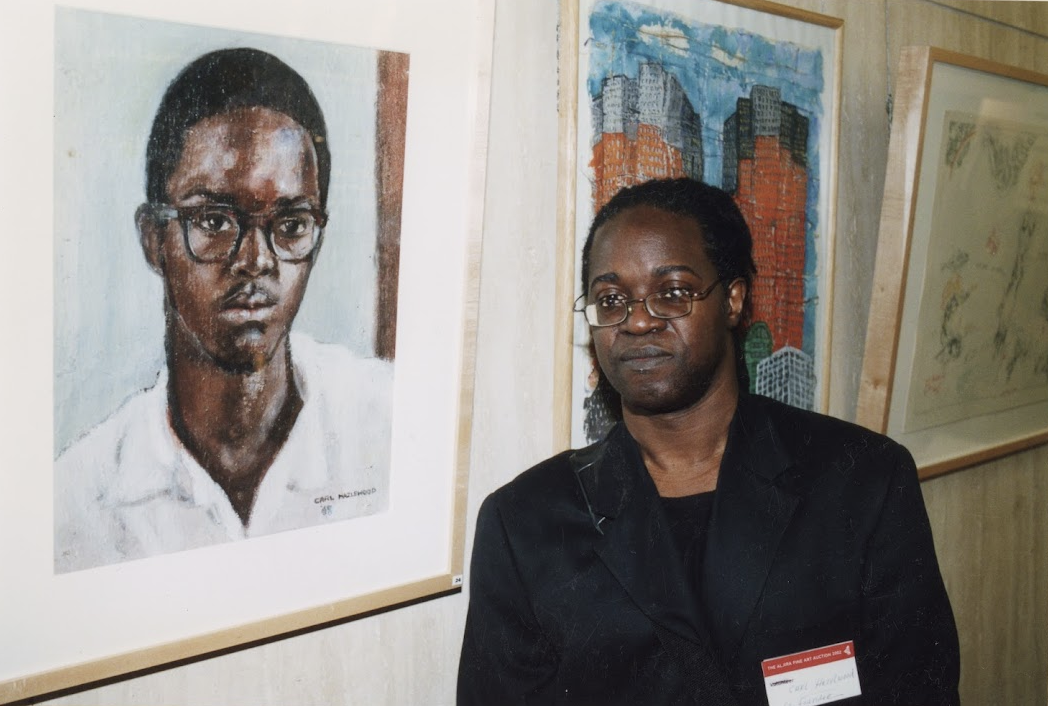
LIA: I’d also like to get your perspective on your art practice: how it coincided with the building of Aljira, what happened in between, and getting to this show that documents Aljira’s legacy, which is now an archive project.
VICTOR: Let me just say this. The further I get down the road with my own practice, Carl and I diverge in a sense, because Carl is on record saying that he had to put his practice as an artist on hold, in a way, to build the organization.
LIA: Did you do the same thing?
VICTOR: Well, I disagree with that framing of what we did. The older I get, the more I disagree with that framing, because I don’t think that creating an organization or institution is any less creative than making a work of art. I think they’re both creative enterprises, so I respectfully disagree with his position on that. As it turns out, Carl was mostly the person who did the curatorial work. I’m the one who built the delivery system, if you will, or the infrastructure, or the platform, as we call it these days, on which the work existed.
I got tremendous satisfaction, not always pleasurable, but a sense of gratification and a sense of accomplishment, from watching our organization go from strength to strength. From being just a studio of a bunch of artists, to building the infrastructure, building the systems, raising the funds, thinking in terms of an organizational plan and structure, putting those in place, and developing relationships with the philanthropic community. That was my job. Carl and I had a special bond, not just in terms of our common origin, since he was born in Guyana and so was I, but we had this kind of affinity where we would sit for hours, sometimes way into the morning, talking about ideas for exhibitions.
What Carl had was this kind of knowledge. First of all, his master’s was in art history, and he did more gallery hopping than I did. He knew a lot more artists. We would talk about a concept like, “Okay, we’ve got this idea, With and Without Acclaim, African American and Latino artists.” And Carl would say, “Oh, I know some artists that would fit into that show. I’m going to call them up, or I’m going to go visit them and tell them about this project.” That would set us off on our different courses. I would be thinking, “Where am I going to get the money to design this? How am I going to get this installed? How am I going to get this mailed?” I was the person responsible, for the most part, for operationalizing ideas. Carl was responsible for the curatorial piece. One of the fantastic things that Carl had was the ability to articulate on the page what it was that we were trying to do. He was a fantastic writer. There’s a story about Carl writing his first essay at Pratt, and his professor said, “There’s no way you could have written that.” His mother had to go to the college and raise hell, because they couldn’t believe a young Black kid could write the way Carl could. He was able to articulate what we talked about and get it on the page. In many ways, there’s a line from that back to our upbringing and education. A large part of Carl’s education was home education, from his mother, because Carl had a condition. He had a hole in his heart, so he spent a lot of time at home and in bed. But he read, read, read, and she encouraged it. His mother was so good that at one point the government actually asked her to take on some other kids. Like your mom, when she left for the day, she said, “When I come back, I want to see you generate something. You’ve got to show me something. A drawing. Tell me about what you read, what you did.”
So, back to Carl and Aljira and me. The more I think of it, and the older I get, there is a different kind of fulfillment from making an art object in comparison to building an organization. But there’s a connection. There’s a certain level of gratification, because it requires a certain ability to get beyond yourself. It requires a certain ability to have empathy for your community, for other artists, for women, for people in the LGBTQ community, for Latinas. Carl had that interest too. Guyana is a diverse place. Back in the day, when there were answering machines, in the early organizational life of Aljira, there were people who used to get upset. I’ve retrieved messages that said, “Well, what are all those white people doing up there?” And then we would do a show of art from the African diaspora, about survival, persistence, continuance, and maybe 10% of the people who showed up were white and 90% were Black. So Aljira was a little bit of a chameleon, depending on its programming. And when we started developing a mailing list, we got smart enough to know that it was too large to just mail to everybody. We learned that a given segment of our mailing list would be interested in whatever the subject matter or the exhibition or the programming was. The intention was not to exclude any group. The intention was to target groups and connect with them, because the issues that we were dealing with in the work were relevant to them. That was something that we learned.
I certainly was not interested in just the formal issues. Carl once did a show called On Paper/Of Paper. It was a good show. It was very much about the formal concerns of artists working in a particular medium, and it was beautiful. Beauty is also a value that we care about. But we were in the middle of a city that was in the process of recovering from white flight. We were in the middle of a city where there was a rebellion, not a riot. It was characterized as a riot by the power structure, but it was a rebellion. I insist it’s a rebellion because of the social injustices: the lack of access to jobs, lack of access to education, lack of access to good housing. It was a food desert. In Newark, you could hardly find any corner store or bodega that sold good vegetables or fruits. There were just little shops, and there was a high level of drug use. There was a place for us to not only present beautiful work and support artists who were not included at the table in the conversation, even though the largest museum was right there in the city of Newark, but also to give voice to so many of our friends and colleagues who were doing work that was equal to the work being presented in established institutions. I would say that what we were doing was not isolated to Newark. There were colleagues, artist-centered organizations, doing that all across the country.
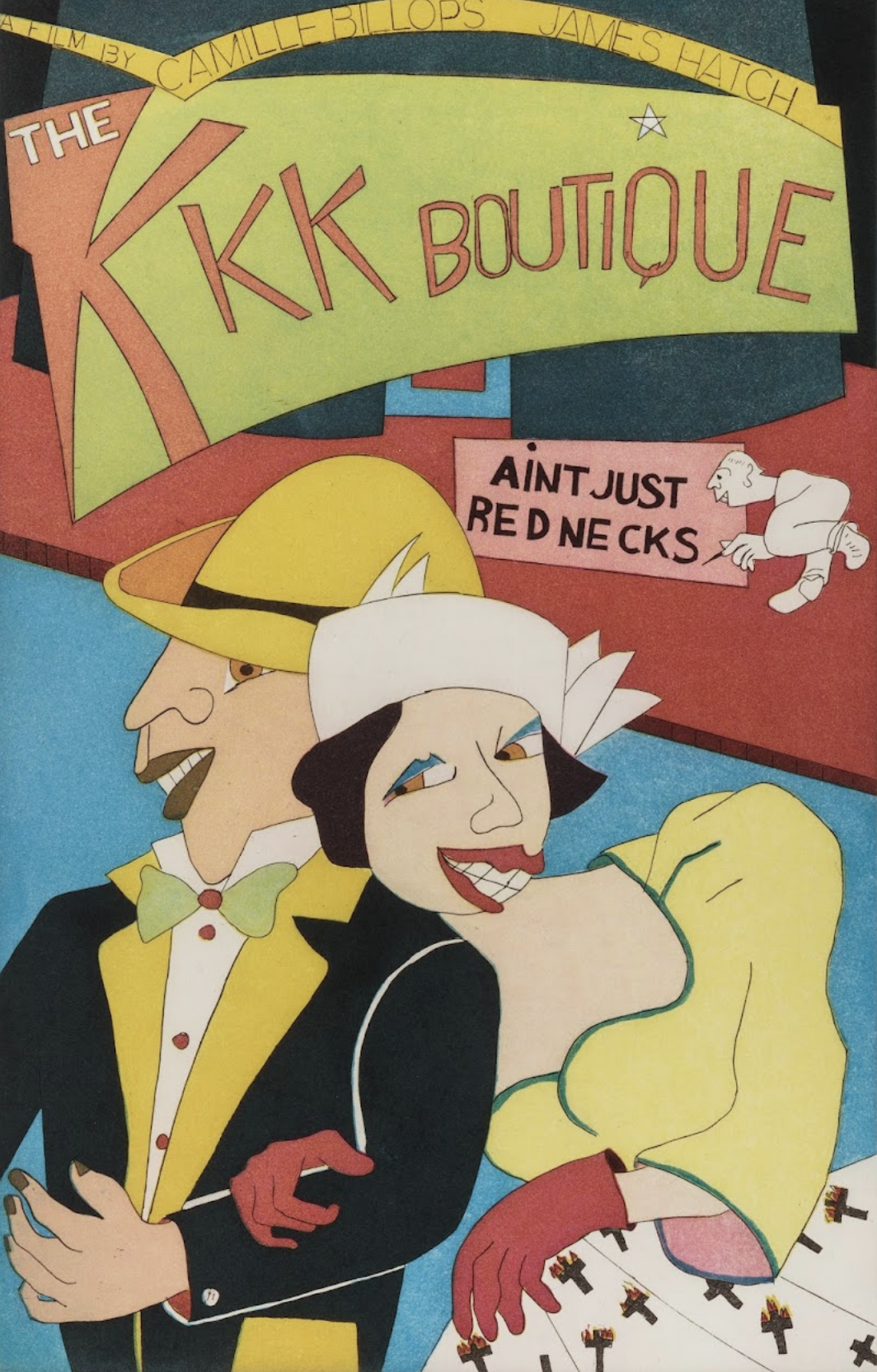
Untitled (KKK Boutique), 1993
LIA: Amiri Baraka wrote to you in 1996 with his drawings and notebooks, calling them colored poems, and you showed them in Word Pictures in 1999. How did that collaboration come about, and what was it like to work with him as a visual artist?
VICTOR: Well, Amiri was born in Newark, and to some extent that was his stomping ground. He’d done a lot of work organizing politically to get the first Black mayor elected, Kenneth Gibson. He had started something called Spirit House, which was a cultural and educational organization, and I think he had something to do with something else called the Free School. He had gone to New York City to be a poet there, and then he came back to Newark. That was the place where he set up shop as a writer and a poet. That was his base. He was highly respected and loved by the community. But he also had a larger profile, which was national and global. He’d written over 40 books. He was a hero in many ways. I’d read his Blues People before coming to this country in ’73, and I was blown away. He wrote that book when he was 25 years old. It’s still a classic. It’s still important. Blues People talks about jazz in a way that nobody else has since, as far as I know.
He was extremely respectful of what I was doing and what we were doing, Carl and I. Carl and I were in some ways ambitious, and we set the bar pretty high. We were not going to be defined by what other people said we were. One funder said, “Why don’t you get a room in the Newark Museum and do this thing that you want to do? You could show art there.” We refused to be parochial. We were coming out of a cosmopolitan context, and our notion of what art is and what art could be was not limited to some little thing in the community. That certainly didn’t satisfy us. Some of the people that we brought into our orbit, people like Okwui Enwezor, who was the first Black curator to organize the Venice Biennale, were also ambitious. Okwui became probably the most important curator of his generation.
So, what brings somebody like Firelei Báez to Newark? Aljira. What brings somebody like Frank Bowling, who was the first Black artist to be elected a member of the Royal Academy of Arts in its 200-year history, to Newark? What brings Jeffrey Gibson, the first Native American to represent the United States at the Venice Biennale, to Newark? Aljira.
That gives you a sense of our ambition. It got pretty difficult for some people, particularly people who perceived us as outsiders, to even bear it when I got back from the Getty. I went to the Getty Leadership Institute, did the museum management program, and came back and said, “Well, what we’re doing is not big enough.” I remember when we got our first New York Times review. It was a Black History Month exhibition that was not about Black History Month. It was just doing what we did with Black artists and Latino artists. We weren’t making a Black History Month show. The Montclair Art Museum had all the usual suspects, all the highly conspicuous Black artists: William T. Williams, Emma Amos, I think, and my beloved friend who just died, Mel Edwards. All the recognizable names. But Bill Zimmer from The New York Times reviewed our show.
So the next day, metaphorically or literally, I don’t know what day of the week it was, the curatorial staff from the Montclair Art Museum came to Aljira. It didn’t help that Bill Zimmer said at the end of the article in the Times, “By the way, Aljira has got a leg up.” Ouch. That said something about our curatorial prowess, something about our authenticity. It said something about our ability to organize exhibitions and present the work of artists who were outside the mainstream, who were not the usual suspects or were not easily recognized. We knew how to do that, we knew how to talk about that, and we knew how to frame that.
Amiri Baraka did the show, Word Pictures, and that was the funniest thing. We presented Amiri, and we found out that he was not a visual artist per se, but he sketched compulsively. He made sketches and wrote things down and made notes, and they were in fact word pictures, and they were interesting. He didn’t go to the art store and say, “Oh, I’m going to buy a canvas,” or, “I’m going to buy a sketchbook.” He sketched on anything that was at hand: an invitation from an event he went to, a piece of cardboard he saw someplace, an old box cover. He used materials that were like children’s materials, things that were not archival: crayons, Cray-Pas. He was what we’d dub an outsider artist, but he wasn’t, in a sense, because this was an important poet and activist, and he was from our community. I got to like Amiri and know Amiri as a person. People talk about Amiri as though he’s this kind of terrorist, but I got to know him as a human being, a fully rounded human being, and that was my good fortune.
He was funny as hell. He never missed the opportunity to make a pun or to say something funny. We got to be so close. He would walk past the reception desk in the front of the gallery without even announcing himself, walk straight into the back where my office was, and pretend he was from immigration and ask me for my paperwork.
LIA: Oh, so he had jokes.
VICTOR: That’s right, he had jokes. He was a riot. He was a funny guy, and I don’t know how many people knew that side of him. But he was also deep and serious. He was a serious person, and he was really concerned about Black people, and he was concerned about the human condition. At the same time, he always had this sense of humor. He wasn’t one-dimensional to me, this kind of rabid activist ready to kill white people. He had two daughters with Hettie Jones.
So, we did the show, and we plastered the wall with everything he ever made a mark on. I paid for the framing, I organized the show, and I put the work up on the wall. We did it salon style, floor to ceiling. And because of what it was, we priced it cheaply, and I think most of the work sold. There was a line. People were in a queue waiting to get their Amiri. Just take it off the wall and join the queue. It was almost like a supermarket.
Camille Billops was a fantastic ceramist, painter, printmaker, and filmmaker. She’s in the exhibition, and she was a supporter of Aljira. So why am I mentioning her? I’m mentioning her because she got onto Amiri’s work. She would come to Newark, I would meet her at the train station and take her to his house, and he would come downstairs with a big old shopping bag with a bunch of stuff in it. It would have glue on it. It was just a mess. It would look like trash. Camille knew how to take that stuff, clean it up, frame it herself, and present it as art. There used to be a Black arts fair at the Puck Building in New York City, and she always had a booth. She sold work out of her loft on Broadway too. The negotiation was always funny, because she would go through the shopping bag. It would be a big old shopping bag from Macy’s or something, and the stuff would just be in there, on cardboard and all kinds of pieces of paper that Amiri chose spontaneously to draw on. She had an eye, and she would put aside the things that she wanted to buy, and then she’d make him an offer. Then he’d take me into the kitchen and say, “Is she trying to rip me off, or is she fair?” I said to Amiri, “You just came downstairs with a bag of trash. This woman is offering you $3,000 cash, not a check. You need to take this money and be very happy.” And you’d see the work at the fair and go, “Oh my God. She cleaned it up. She fixed it up. She framed it beautifully. She presented it.” A lot of famous writers and photographers and artists would buy it. It would take her a year or more to recover what she invested in cleaning it up, but she created real value for the work going forward.
After that relationship, that bond, started, I supported it. At one point she was getting ready to do a show of his work, and I had to go get him and take him to New York, because it was so wild. Some of the work he didn’t sign, and some was signed, but you couldn’t read it. We spent about half a day just getting him to sign and date the pieces. That was fun too, in a way. It’s work, but it was fun. Having the two of them in a room, they both had potty mouths, but they knew a lot about Black people. They knew a lot about history. To be in their presence and to hear them go back and forth with each other and, as they say, talk smack, it was a privilege for me. For the exhibition, the Newark Museum borrowed three or four of those pieces from the Hatch-Billops Collection. Camille Billops is somebody who was very near and dear to me. She was a wonderful filmmaker, a wonderful artist, and a friend of Amiri’s. They could get into a fight in an instant. But there was also a lot of love there, and warmth. They didn’t let up. They didn’t give each other a pass. They were fierce. Witnessing those encounters was like watching history being made in real time.
When you get a chance, I want you to look at Camille’s two films. The first one is Finding Christa. Camille had a child that she gave up for adoption, and later on, when Christa was an adult, this film is about finding her. The second film, which I think is really important, is The KKK Boutique Ain’t Just Rednecks. I believe it was about colorism in the Black community. It’s a very tough examination of how we value each other based on who’s lighter than who, or who’s got good hair. I remember one frame in which she’s interviewing her niece, who is very light, and the line that comes out of her mouth is something to the effect of, “I’ll never date a man who’s darker than me.”
I’m going to leave that one there. Oh, Jim. I can’t leave it there. I’ve got to say one thing about Jim (Camille’s husband and collaborator), because Jim Hatch was white. I remember we had a program at the Newark Museum. They were going to screen one or both of those films, I don’t remember which, and Jim gave an introduction. He said, “Just because my wife is Black doesn’t mean I’m not a racist.” In other words, being married to a Black woman doesn’t get you a pass. You’ve got to work at that stuff every day. You can’t say, “Oh, my wife is Black, so I’m not a racist.” It goes deep. It makes you think really hard about the kind of legacy and the kind of history that we’re dealing with in this country now.
Well, that’s my Amiri story.
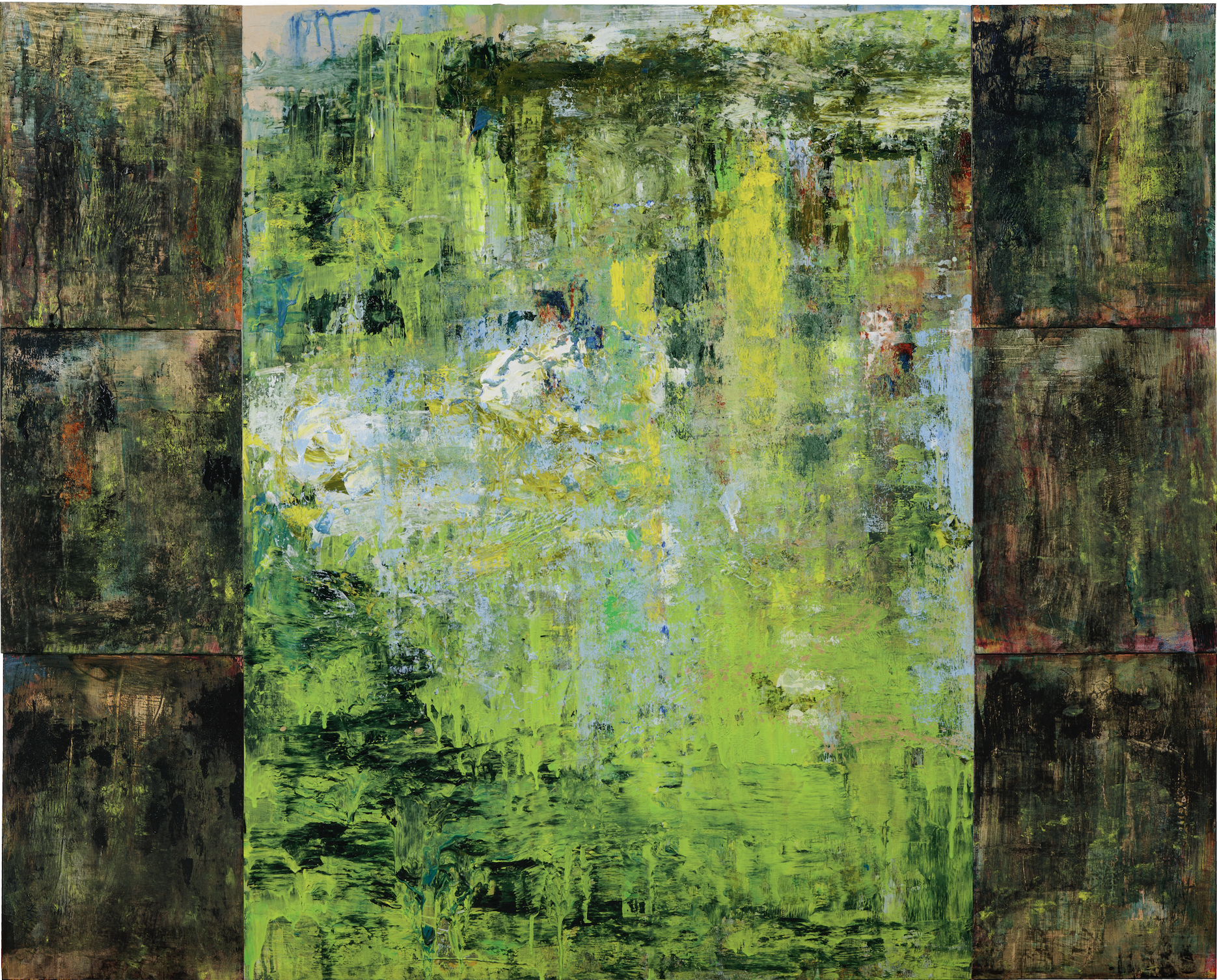
Tomorrow will come on its green footsteps (First Mountain), 2020
LIA: To circle back to the museum and this exhibition: in 2023 you brought this project to the museum and called it An Act Against Erasure. After Aljira closed, you and Cicely kept the archive. You rescued it from a flood in 2021 and now hold it in your garage. Why did you take that on, and what do you want the archive to become?
VICTOR: It’s a tough question, because what we were trying to do was save our legacy. Both Cicely and I had invested… I had invested most of my adult life in creating Aljira. I left Aljira in 2016, and it closed in 2018. All the records, all the art, the computers, the servers, everything was abandoned by the people who succeeded me, the board and the staff. I spent 10 years studying succession planning, but if you don’t have the right people to succeed you…
The field is so thin. I am so happy when people like you pop up in my life, because there was a time when there were no… Look across the state of New Jersey, let me be specific: there were no Black curators. There were no Black people running major arts institutions. And this has to do with our legacy too, the legacy of Black people. Either because we’re directed toward it or out of necessity and need, we find ourselves entrenched in the busy, busy business of finding a job, making a living, supporting ourselves. Being a Black director or a Black curator is an anomaly. It’s a rare thing. The field is changing now. Alliyah Allen is a kind of child of mine, in a sense. It gives me such joy when I see a face like yours or a face like Alliyah’s showing up on the cultural landscape and doing this work, because 50 years ago, there were only two Black artists in the world: Jacob Lawrence and Romare Bearden.
Actually, that’s not true. There was a group called Spiral, and it included one woman, Emma Amos. Behind me is a quilt by Faith Ringgold. She was a fighter. She was rejected by everybody, but she absolutely refused to stop fighting. So I’m saying, look at where we are right now in the cultural space, in terms of having a voice in that space. Cicely and I just went to the Barnes Foundation, where there was a conversation between Kellie Jones and Rujeko Hockley, a curator from the Whitney. The conversation was about a publication that’s out now called Black Curators Matter. To me, that’s a given. Black curators matter, because without Black curators, I will tell you, there would be no major or groundbreaking exhibitions. There would be no Aljira. There would be no Just Above Midtown. There would be no Kenkeleba.
I get emotional. I just get emotional when you raise these things, and I go off.
LIA: You’ve witnessed and experienced so much, and you’ve been able to see trends come and go and evolutions take shape over time. Of course you have so much to say. It’s hard to keep it on topic, because there are always more connections to make.
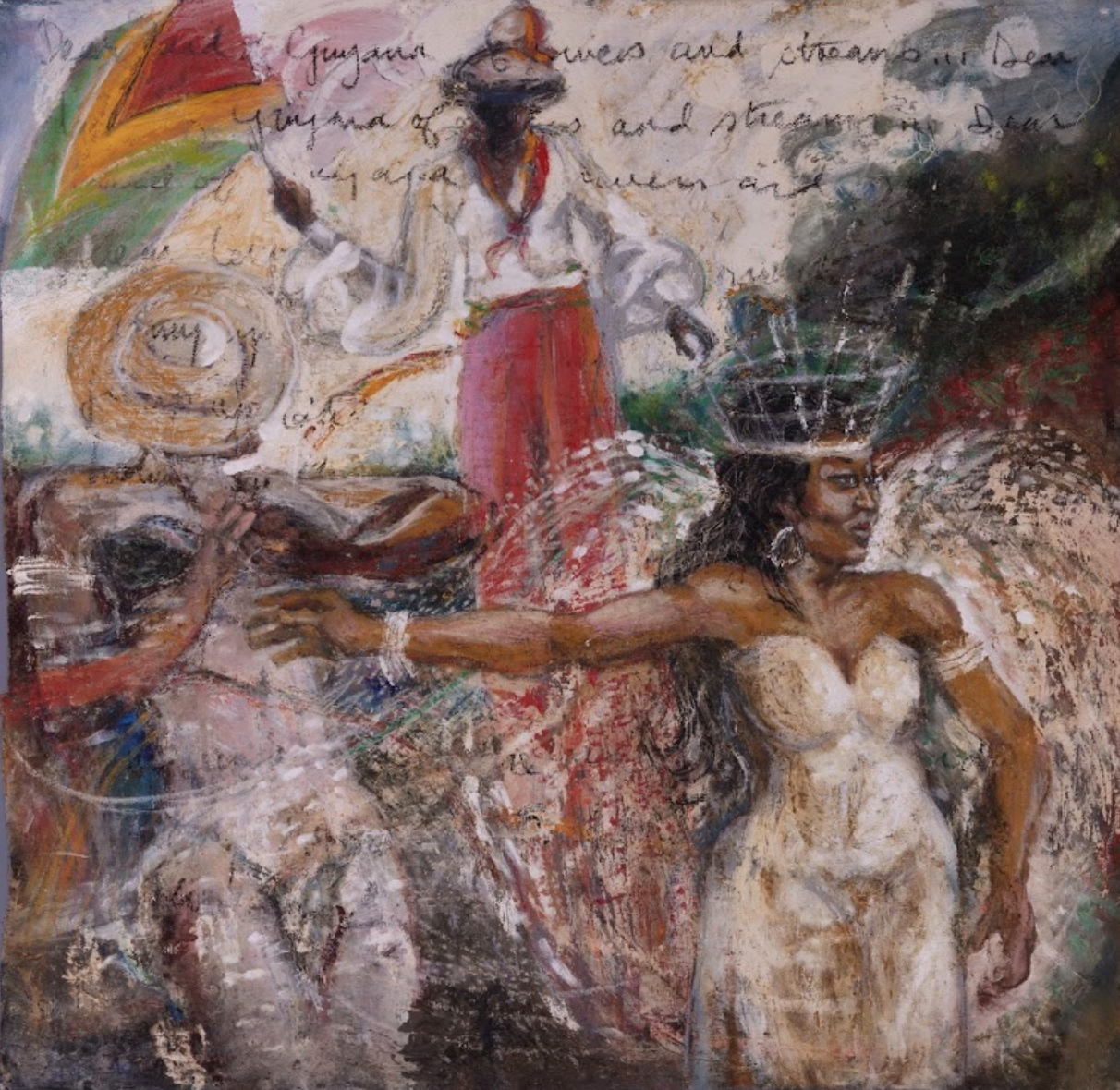
Bad Cow Comin' (Dear Guyana), 1998
LIA: I’ll ask my last question. You’re painting and exhibiting again, and Bad Cow Comin’ (Dear Guyana) and Polygon I are both in the show. What is it like to see your work hanging alongside the history of the space that you built?
VICTOR: One of the things that Carl and I made a commitment to was that we were not going to make Aljira into a vanity space. So we never put ourselves into the shows that we put up, except the first show. When we opened the studio for the first time in 1984, we were in the show, as were Cicely and other artists. Then we stepped back and decided this is not a vanity project. We’re not opening this to show our work. We had a mission, which clarified what it was. The mission was focused on creating opportunities, creating a platform, for artists outside of the mainstream. Specifically, I think we’ve probably served more women of diverse backgrounds than any other group, whether they were Asian or Black or Latino.
So to see my work on the wall, I had a sort of tinge of that feeling: “Is this going to feel like a vanity project?” But Alliyah and Tricia Laughlin Bloom were so sure that this was the right thing to do. We didn’t even have a conversation about it. They came to my house, and that painting, Dear Guyana, belongs to Cicely. She owns it. She claimed it. There was no discussion. That was hers. I was doing a body of work in that vein that had to do with memory and identity. It came after the abstract work, Polygon, because I had a feeling about Polygon that too much of who I am was absent from that work. It was too much about formalism. The work was good. I have a lot of that work, and I believe in it, but it was formalist, and it was a reaction to coming of age in a tradition that was like Dear Guyana. I was almost reacting against my teacher, my initial teacher.
But then I found myself removed from a vocabulary that could say something about identity and memory and my childhood. I missed it so much that I did that body of work. And seeing it up in a museum setting, particularly Polygon: it’s next to an artist that I admire, who died recently too, Joe Overstreet. With his wife, Corrine Jennings, he founded Kenkeleba, which is now a museum in New York on the Lower East Side. I was just in a show there curated by an artist and curator named Lamerol Gatewood. It was called Reimagining Landscapes, because since COVID I’ve been doing lots of landscapes, large and small. He came to visit me, the studio visit prompted the idea, and he built a show around it that started out at the University of Hawaii and then opened in New York. It was really great to show at the university in Hawaii and then bring the show home.
LIA: I think it’s so great that you’ve been a part of this legacy institution that you had a hand in building, to see all the work that has been done over the years, and to have your work alongside it in an institutional exhibition for everybody to see, placed within that context, within the art historical canon, so to speak. It’s so important for our community, for Black people. Thank you for having this conversation with me.