

Shae McCoy
Shae McCoyBaltimore, MD USA https://www.shaemccoyphotography.comInstagram: @shae.mccoy.photos
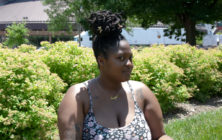
Shae McCoyBaltimore, MD USA https://www.shaemccoyphotography.comInstagram: @shae.mccoy.photos
Did you always know you wanted to be a creative and a photographer?
SHAE: Photographer? No. A creative? Yes. I always knew I was going to do something creative, I just didn’t know what. When I was younger I wanted to be a writer, but more like a creative writer. As I got older, my passion for writing was still there, but it shifted once I went to college. I learned about journalism and I started writing for my blog and all of that. My writing turned into more of a journalistic thing. In the midst of that, I needed a camera actually, because I needed to take pictures for my articles and stuff. And I just started taking my camera out every day and practicing. I just started shooting different things. At first I was just shooting, like going to different events and shooting stuff. I’ll put the photos on Instagram and tag whatever event it was. And then people started to hire me from doing that. So I just kept going and practicing. I always knew I had a very creative background and mind, but I didn’t know exactly what I was going to do.
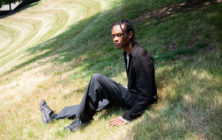
Torrance HallBaltimore, MD USA https://www.torrancehall.comInstagram: @torrancehall
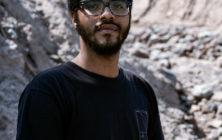
Granville CarrollRochester, NY USAhttps://www.granvillecarroll.comInstagram: @granville_carroll
Did you always know you wanted to be a creative and a photographer?
GRANVILLE: I did not always know this. I fell into photography. Looking at my past, I see that I’ve always been interested in art and the idea of expressing myself through these means, but I never fully thought of it as a career path or anything of that sort. In junior high and high school I took a few art classes, but it wasn’t until I actually got to college, when I was studying psychology, that I decided to take my first photo class and then I was hooked at that point. I no longer felt super passionate about psychology. Something in me was like, “this is not the path for you”. Then art came about, and one of my teachers said, you know, why not become an artist? And I was like “you’re crazy”. I thought about it further and I decided to embrace the unknown. I knew nothing about the arts, so it’s interesting to really look at my path and see how it has unfolded. I never thought being an artist was a viable career path. And then here it is, I’m living it. It’s beautiful to see it come full circle.
Did you always know you wanted to be a creative and a photographer?
TORRANCE: I always knew that I wanted to be an artist of some sort. I spent so much of my childhood merging books or video games I played with my own reality. I always loved sketching out alien worlds, creating characters and fantastical scenarios that closely mirrored my everyday life. I have so many memories of escaping to the woods and transforming into different identities I had fabricated for myself the night before. I really enjoyed playing different roles as a kid and the woods always acted as my stage. There was no judgement, no boundaries and I could become whoever I wanted to be.
Photography came to me unexpectedly while I was in middle school. My parents brought home a digital camera one day and for whatever reason I had become completely infatuated by it. It quickly became a ritual to sneak into their bedroom everyday after school and teach myself to properly operate it. Figuring out the basics of image-making came very naturally to me and before I knew it I began taking images all over the place.
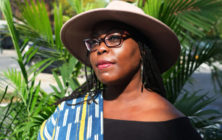
Laylah Amatullah BarraynNew York, NY USAhttps://laylahbarrayn.format.comInstagram: @laylahb
Did you always know you wanted to be a creative and a photographer?
LAYLAH: I knew from early on that I did want to use the camera to express myself and to document. So I knew I wanted to do that. I knew the camera needed to be in my life in that way. I saw its power. I saw its healing power. I saw its power to fortify and create identity. I saw its power to be empowering. I knew that very early on and I wanted that to be close to me. I knew that I wanted to create, I knew that I wanted to be an artist. I grew up understanding the power of art, particularly how art was used through activism. Growing up in the eighties, one of the big events was with the divestment of apartheid. You had political activists, but also you had artistic activists speaking and working toward the divestment and eventually the dissolution of apartheid. I saw those things in real life. I just felt very artistically inclined since as long as I can remember. I knew that I wanted to do that when I grew up and have that be a part of my career.
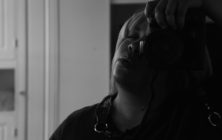
Did you always know you wanted to be a creative and a photographer?
SCHAUN: I’ve always known that I wanted to be a creative. I knew that I wanted to be involved in visual arts. I did not immediately believe that I was going to be a photographer. I think it was just something that I was drawn to when looking at pictures and movies. I actually thought that I would be a filmmaker.
Schaun ChampionBaltimore, MD USA https://schaunchampion.comInstagram: @schaunchampion