
In Conversation: Black Photo Students on Art, Legacy, and Becoming
By Lia J. Latty
Published: May 29, 2026
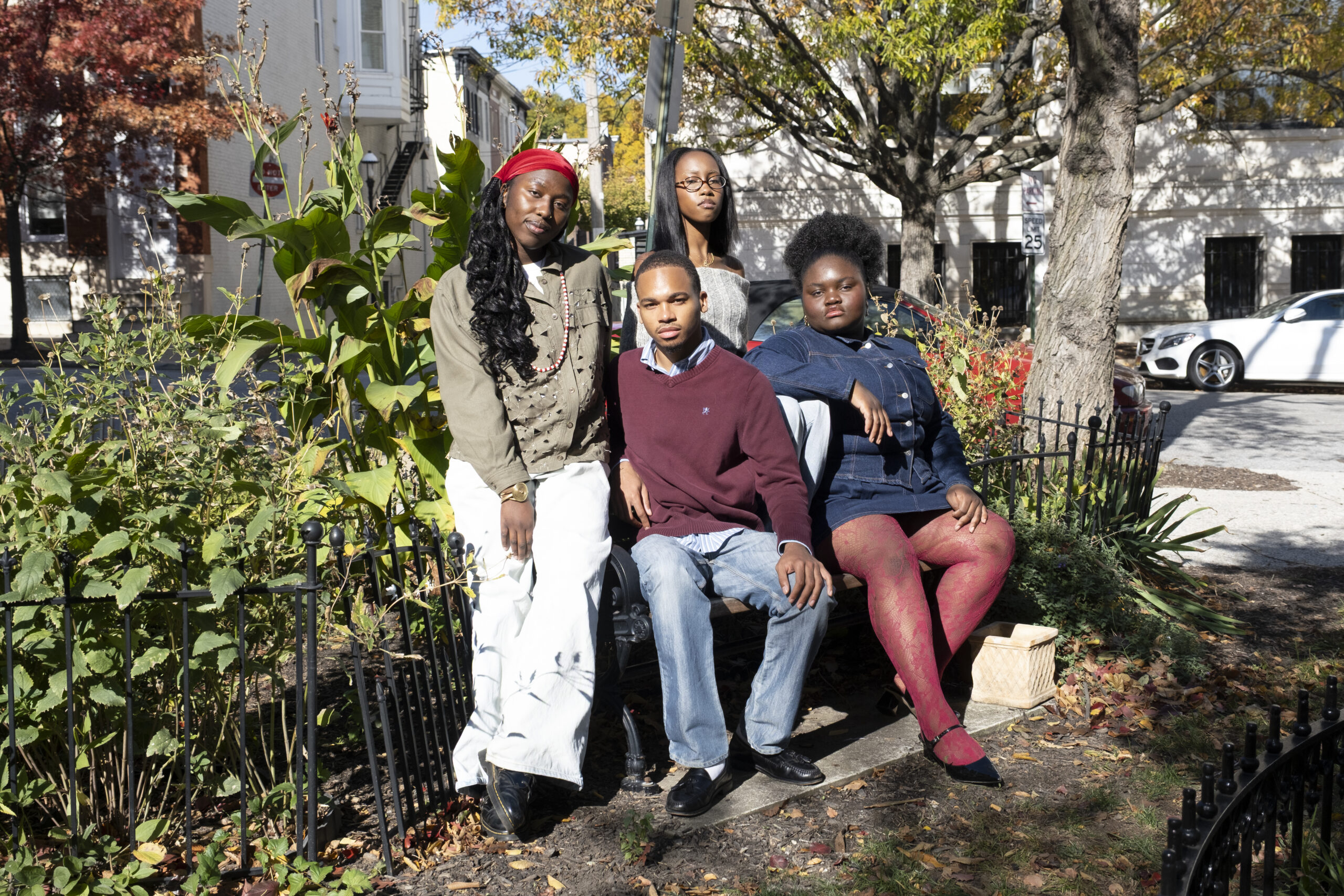
When I chose to attend MICA, I knew I was stepping into a space where artistic talent thrived. What I didn’t expect was to witness a distinct legacy taking shape—one driven by Black students whose work challenges conventions and redefines representation in the photography world.
Attending art school as a teenager is a bold and unique choice. For many, it stems from a deep passion for art or exceptional talent in their chosen medium, often paired with a lack of interest in pursuing more conventional career paths. It’s a risk few are willing to take, which makes the experience all the more special once you’re on campus. There’s so much to absorb from peers and professors alike, shaping your experience in both positive and challenging ways. During my time at MICA, I was continually inspired by the talent of my peers, particularly within the B.F.A. program. These artists deserve more recognition and support, both during and after their academic journeys. Gallerists and collectors often evaluate artists based on their CVs, considering exhibition history, publication features, personal projects, and educational background.
However, Black and Brown students in predominantly white art school spaces often face unique challenges, from experiencing silence during critiques to dealing with isolation and gaslighting. Despite these obstacles, their creative output remains powerful and deserving of recognition. Before I graduated from MICA in 2022, I got to witness my peers in the photo department making very compelling work across a wide span of topics and experiences. During my time there, I noticed the standout work of other Black photography majors in the department—particularly those who graduated a few years ahead of me. Deyane Moses, Torrence Hall, Faith Couch, and Beverley Price—just to name a few. Each person made their own mark in the department, and I knew I wanted to do the same for myself. Even now, some of the latest Black students in the photography department at MICA are artists everyone should keep their eye on. These reflections lead me to question: Are we witnessing the emergence of a legacy of notable Black students in MICA’s photography department? Could there be a forgotten history that deserves recognition? How do we ensure that this unfolding narrative is properly documented and preserved?
Each interview was conducted individually between January and February 2026.
Alaina Lurry (MICA ’26)
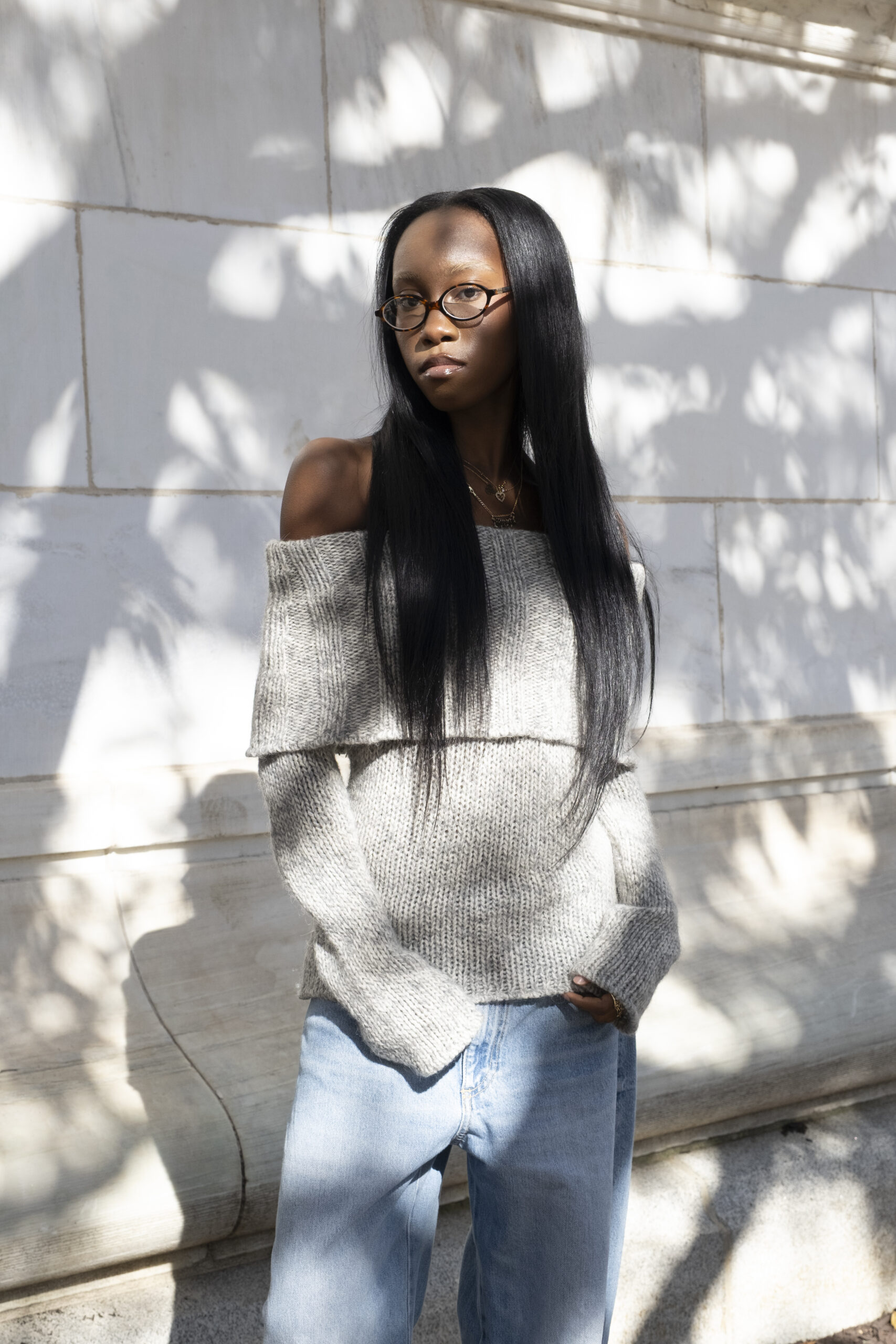
What led you to pursue art school, and how did you know photography was the medium you wanted to build a practice around?
ALAINA: From a young age, I had had a strong inclination towards art, and because of this, my parents enrolled me in arts middle and high schools. When it was time to apply for college, I knew I wanted to continue my arts education. It was only recently, after I fell in love with photography, that I started applying to different programs across the country. Since photography is such a tactile, equipment-based medium, I knew I’d need access to resources, education, development, and support from faculty, and these were all things school could afford me. I knew college would provide me with the support and framework to become the artist I aspired to be.
During my sophomore year of high school, going into the pandemic, I took a Digital Arts and Media class where I was introduced to photography as an art form. My teacher gave us an assignment where we were to make an editorial campaign for a “magazine”. We were tasked with our own castings, assembling teams for makeup, hair, styling, set design, and creative direction. Having that type of control over my art and being able to be a part of a process from its ideation to completion opened my eyes to what art could be. The feeling photography gave me was one I hadn’t had with any other art form. I fell in love with image making, process, and creative direction. Making photos is something I am continuously being drawn towards. Being a photographer has allowed me to explore so many different avenues of my own interest, and forge narratives I’m not sure I would have been able to portray otherwise, and for that, I am grateful to the medium.
Were there moments of collaboration, feedback, or even just presence with other Black artists at MICA that shaped how you see yourself or your work?
ALAINA: There have been key moments during my time at MICA where the community I’ve found in my Black peers has been imperative to my journey as an artist, person, and student. I have fond memories as a freshman and sophomore where I would watch people like Mathilde Mujanayi and Oreoluwa Akinyode create and inquire about photo and their practices. Having such a strong network of friends and peers has allowed me to grow as an artist and challenged me in ways I might not have gotten in the classroom.
Having Black peers in this space has shown me what was tangible, I believe, even after some of my peers have graduated; it’s encouraged me to work alongside my friends like Reginald Ramson to bring our visions to life. It’s been a gift to find such a close-knit community. My community has been one of the most influential things during my time as a student at MICA.
What do you hold onto as you continue building your practice?
ALAINA: As I continue building my practice, I consistently hold onto innovation. While I realize I am not the first to make work about the Black experience in America, I find it interesting to impose my own perspectives, complaints, triumphs, and artistic style on the work I create. I continually explore how the Black body exists in space, what that relationship means and looks like, and how to view things from multiple perspectives or access points. I am called to juxtaposition often; I like to see how far I can push an image, derive meaning. I am continually pondering how much we can question and unveil to unlock a truth.
Mathilde Mujanayi (MICA ’25)
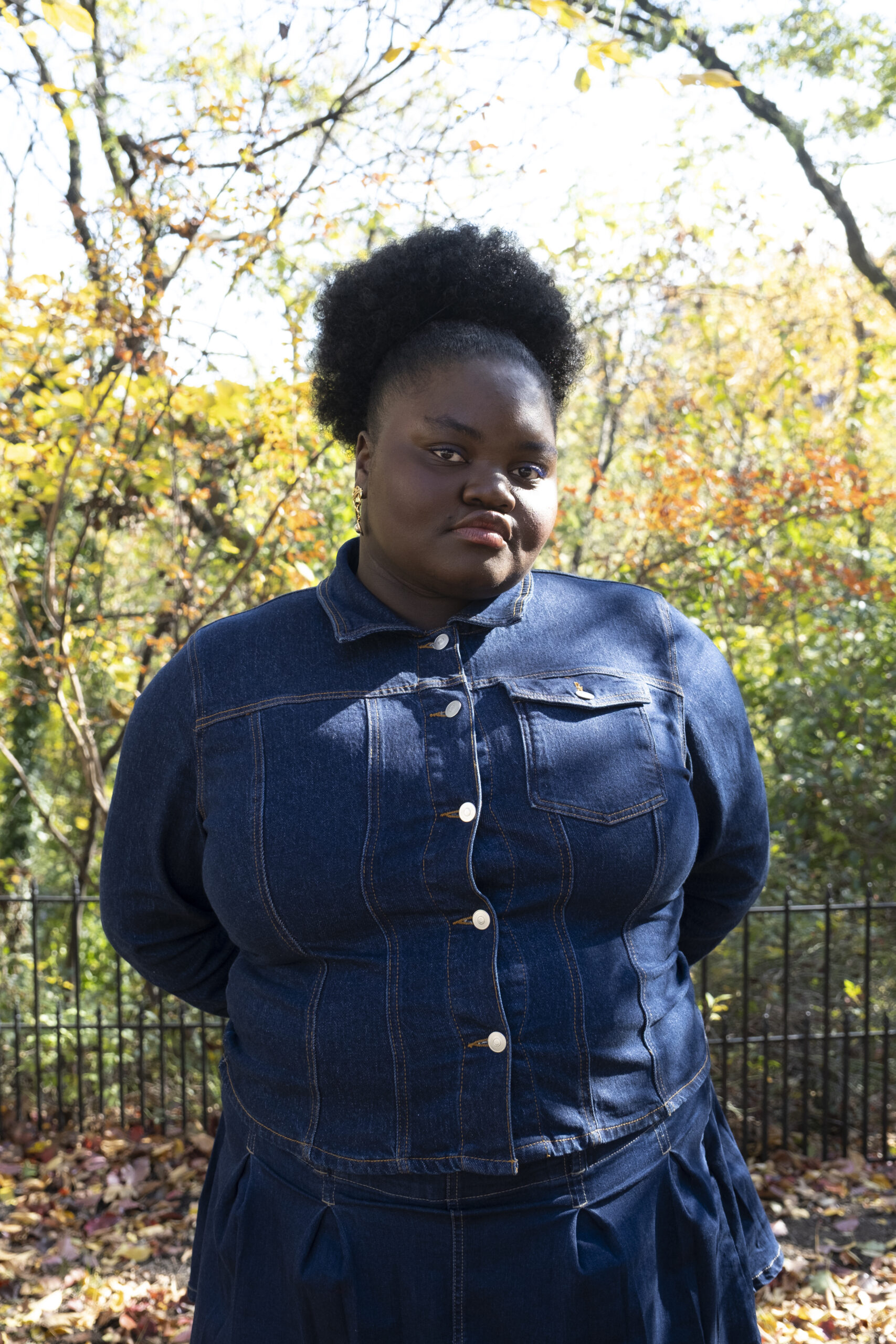
What led you to pursue art school, and how did you know photography was the medium you wanted to build a practice around?
MATHILDE: I had originally decided to go to school for linguistics and communications. What led me to pursue art school was actually a teacher of mine in high school who was almost like a father figure to me. His name was Peiter Griga, he was my photography teacher, just a funny weird guy but very fatherly. I was in his class since freshman year. High school was a bit crazy for me. I didn’t have the language to articulate my experiences the way I do now, and within that, photography became a second language, one that could express my feelings and experiences for those willing to receive them. I think this is ultimately the foundation of my practice. And he was kind of the only one who was. He was actually the one to encourage me to pursue photography. He told me about MICA and encouraged me to try it, so I did and ended up applying.
Were there moments of collaboration, feedback, or even just presence with other Black artists at MICA that shaped how you see yourself or your work?
MATHILDE: Yes, I wouldn’t have graduated or made the work I did without them. There was only one Black photo staff member, Kris Lee, who became a kind of beacon for all students, especially students of color, and for me particularly. I don’t think I would be the artist I am today without having had her in my corner, looking out for me and the other students who were having a hard time. I had difficulty voicing what I wanted, and Kris helped me exercise my ability to take up space. I could only be as open as she made me feel welcome. Then there’s Lisa Brown, who was really impactful to my thinking about my future. She’s such a force, and she kind of snapped me out of my lack of initiative when it came to post-graduation. She also just made me more aware of myself as an artist and how I move through creative spaces.
There are so many names: Linnea Poole, Jellema Stewart, Rhea Beckett, Tyannis Carter, Faith Couch. And, hopefully I’m not forgetting anyone, but those are the Black staff and artists I interacted with who really poured into me. It’s a short list. I think MICA can be a very isolating place if you don’t know who to look for or where to look. Being a Black artist within a predominantly white institution means you have to actively seek people out and build community, though maybe that’s just the artist experience broadly.
I also can’t forget my peers, those who came before me, alongside me, or after. Having artists like you or Matthew, who during my sophomore year helped me with a photo assignment and told me he wanted to make sure I didn’t feel alone as a Black artist in a white space because he had experienced it too, that meant a lot. Or having peers who could give feedback with better context because of shared culture. I just remember feeling lost at certain points, knowing that my professors’ guidance could only go so far, especially within work that speaks to the Black immigrant experience. In those moments, my community of Black artists was most helpful. They helped center me again, and I was able to complete my thesis.
What do you hold onto as you continue building your practice?
MATHILDE: Maybe everything and nothing simultaneously. I think I want to hold onto the curiosity I have for myself and especially for the people and things around me. I want to continue being curious about the world and continue my pursuit of understanding it through my practice.
Reginald Ransom III (MICA ’26)
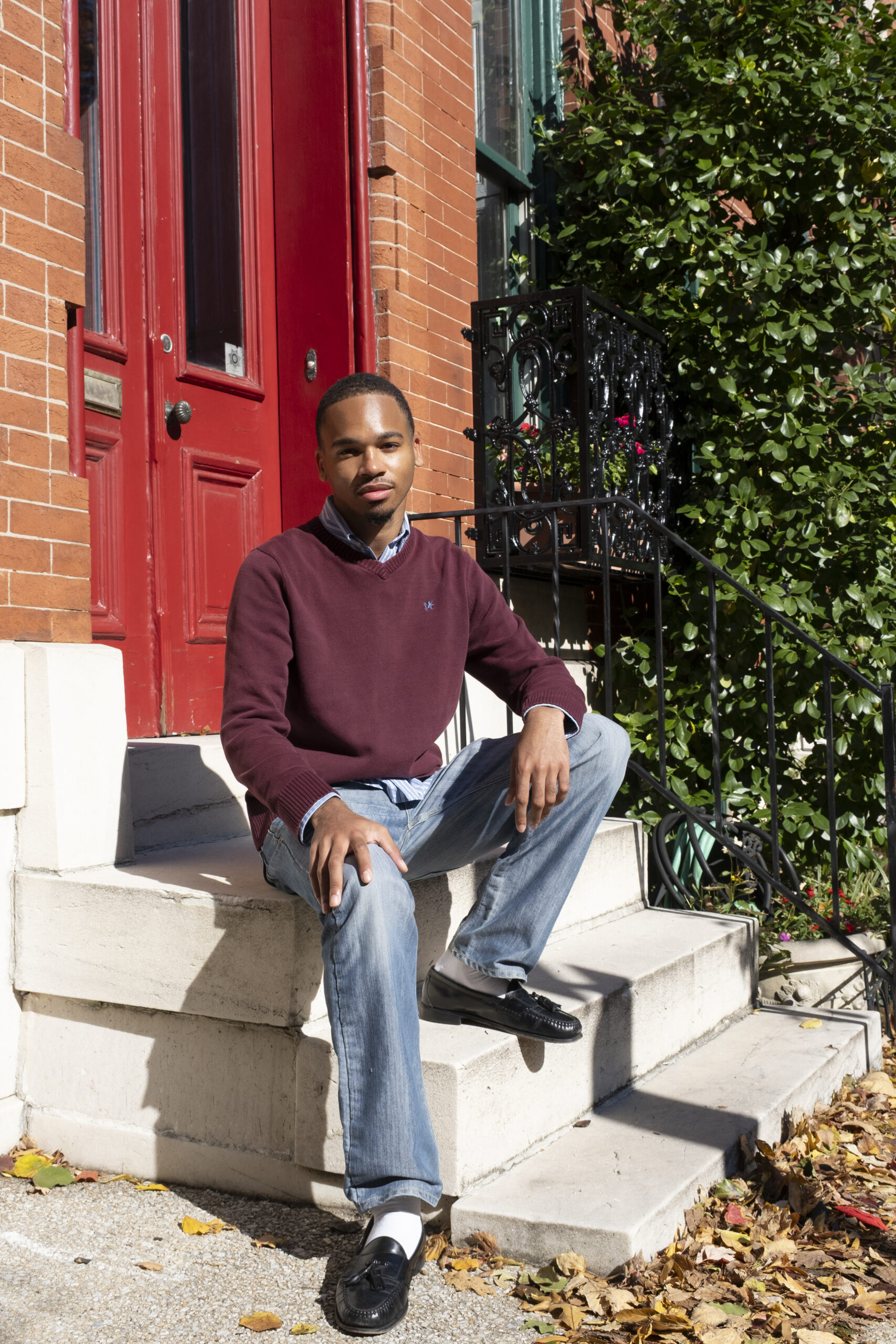
What led you to pursue art school, and how did you know photography was the medium you wanted to build a practice around?
REGINALD: I spent a large portion of my primary education in an art and design school. Being in an art space felt the most familiar to me, and I couldn’t imagine pursuing anything else. I knew that I wanted to attend an art institution for higher education during my freshman year of high school, when I saw my upperclassman peers get into those establishments; they made it clear that it was a possibility.
I entered MICA with the intention of being a General Fine Arts student. Then, for the second semester of sophomore year, I tried my first photography class, which was a black-and-white analog class. I fell in love with the process, the community that the students curated, and my mind became aware of the power and possibilities of photography. At the end of that semester, I changed my major.
Were there moments of collaboration, feedback, or even just presence with other Black artists at MICA that shaped how you see yourself or your work?
REGINALD: The small community of black artists at MICA has greatly impacted the way I see my work. Through discussion and critique, I’ve come to notice how my practice is in conversation with a historical presence that cannot be denied. My peers have introduced me to artists who were making work about topics I was interested in at the time, but hadn’t a clue what it looked like. My community strengthened my mind and my love for art.
What do you hold onto as you continue building your practice?
REGINALD: As I build onto my practice, I hold onto and acknowledge the work and the artists who have come before. I hold onto my family archive, which initiated my interest in images as a youth. I hold onto Audre Lorde’s “Uses of the Erotic: The Erotic as Power” because of how it changed my view of power, the erotic, and fulfillment.
Oreoluwa Akinyode (MICA ’25)
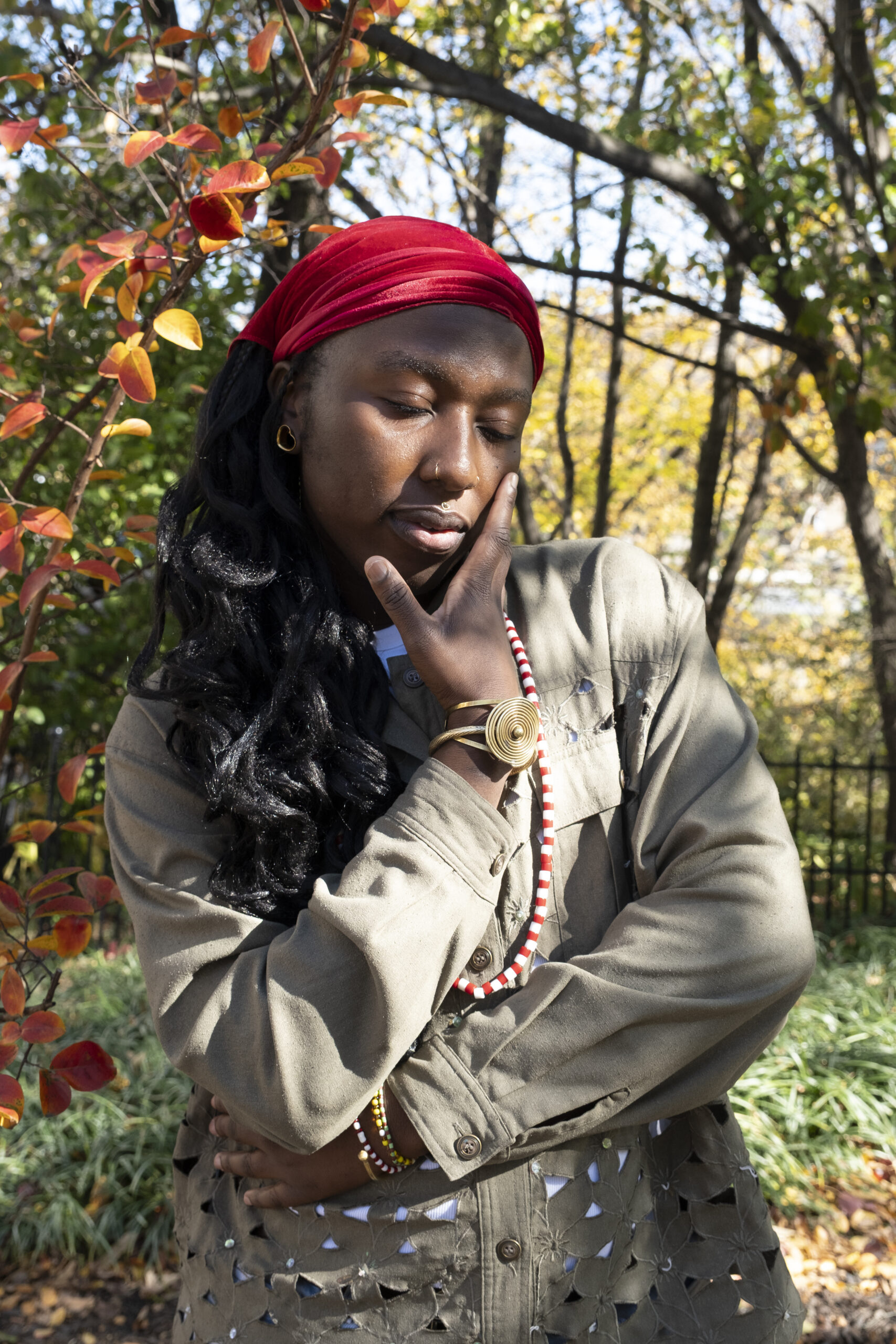
What led you to pursue art school, and how did you know photography was the medium you wanted to build a practice around?
OREOLUWA: What led me to pursue art school? Honestly, it’s funny because right now, as I’m talking to you, I’m looking around my apartment at the last things I’m packing up, some of the photos I made my freshman, sophomore, junior, and senior year. They’re all in the room right now. That’s actually so crazy and so beautiful.
My love for photography, image making, and storytelling really comes from my family. My father has been an incredible archivist of our family history. When I talk to him now, he says photography was just his hobby growing up, and I found out that the first camera I ever got was the same brand of camera he had back in Nigeria. He used to wash cars to save up money to buy it. I don’t have those negatives, but I can see the thread in my family: there have always been photographers, whether as a hobby or a business. I have a great uncle who was the first person to open a photo studio in Ondo, Nigeria, our hometown. It was open day and night.
When I think about what led me to art school, it was really ancestral. My love for photography, image-making, and writing has always been in me. I always wanted to be a performer, an actor, even though I was really shy growing up. But looking at these photographs around me now, I can see how my camera gave me a space to perform, and to have people perform with me.
I was also a STEM student. I was in a dual enrollment program and got my associate’s degree in Health Sciences in high school. But I took a gap year, and that time really gave me space to ask: what do I actually want? When I went to MICA, I had never even been on a tour of the campus. Orientation was my first day there. But having access to the resources to create, and to create with purpose, that’s what led me here.
Were there moments of collaboration, feedback, or even just presence with other Black artists at MICA that shaped how you see yourself or your work?
OREOLUWA: Working alongside Black image makers in my department mattered. There weren’t many of us, but the ones who were there were essential. And truthfully, I learned from everybody in my department: Black, white, people of color. I want to be clear about that. But there were certain things I could only relate to with other Black image makers and Black artists at MICA across different departments. That community really boosted my morale, even when it had nothing to do with the actual work I was making. Just having that around me kept me going. I think sometimes in art spaces, especially right now in America, art gets framed as something just for fun. But for me, having Black artists and Black people around me at MICA and outside of it was literally what kept me going. I invited friends, people I trusted, people from my everyday life, to come talk to me about the work. That shaped my experience and pushed me to think more critically about what I was making.
Having Black artists who challenged me was essential. And not having enough of that, people who would really engage, who weren’t afraid to ask real questions even if they didn’t know the content, was hard. But recognizing that lack is what prompted me to go seek it out for myself. That became a practice: actively finding people who wanted to genuinely engage with my work. And my work does require that kind of engagement. My practice centers Black diasporic traditions, specifically Nigerian spiritual traditions, and documenting those with care and dignity. These traditions are usually demonized or shown in an unflattering light, so for me the question has always been: how do I document myself, my community, and my family in a way that venerates and honors Black spiritual life as a Nigerian person living in America?
So both having Black artists around me and not having enough of them taught me something. I’m grateful for all of it: everything I learned at school, the community I built, the people who challenged me, and the people I got to celebrate with.
What do you hold onto as you continue building your practice?
I love this question, and this moment feels so significant for me, Lia, because you’re interviewing me on the day I’m literally leaving my apartment. I moved closer to MICA during my senior year, in December of 2024, and today I’m moving out. My friend is in here moving things around, and I’m watching my artworks shift across the room as we talk. It’s so full circle. I also just want to give you your flowers, Lia. It was really meaningful to have you in the department. When I was a freshman and you were a junior, being able to receive wisdom from you and from other students who were already there really lifted my spirit. I appreciate you for asking this.
So what do I hold onto as I continue to build my practice? The work continues. It’s not always easy, and it was never meant to be easy. But it’s worth it. It’s worth it for me, for the people who came before me, and for the people who will come after me, so they know they can do it too. We are in conversation with each other across time, long before I was alive and long after I’m no longer here. What I hold onto, and what I hope for, is to be part of a larger fire: one that spreads good work, critical work, engaging work. Work that challenges us to be better as artists, as cultural workers, as storytellers committed to honesty, change, and transformation for ourselves and our communities, with care, love, and respect.