
Where the Community Gathers: AFRAM 2025
Founder and Editor Lia J. Latty attends AFRAM for the first time, and documents the energy of the festival.

Founder and Editor Lia J. Latty attends AFRAM for the first time, and documents the energy of the festival.
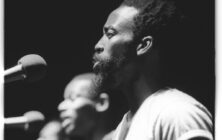
How Essex Hemphill’s poetry finds new life through Black queer image-making at The Phillips Collection.
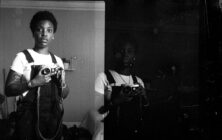
Did you always know you wanted to be a creative and a photographer?
FRAANKIE: Creative AND photographer? NOPE! If we’re defining “a creative” as being an artist of some form or fashion, I’d say most definitely. My mom’s an artist, so I think that opened up a lot of doors for me to navigate the world creatively. I’ve done my share of exploring a few different creative practices throughout the years, from writing to music-making, drawing, and painting. Photography was definitely a curveball. I’ve always loved photographs. Good photographs. Bad photographs. Doesn’t matter. One of my favorite pastimes growing up was looking through family photo albums…
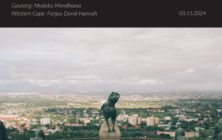
“Urban On My Tongue” is an exhibition that acts as an introduction to the discourse on urban culture in South Africa, as analysed by Linathi Makanda. In collaboration with three photographers from distinct provinces, Makanda aims to explore the cultural atmosphere within these regions. She works alongside these photographers to capture their perspectives and foster a visual dialogue.

Did you always know you wanted to be a creative and a photographer?
REBECCA: While creativity has always been an integral part of my identity, I didn’t initially know of the possibility of pursuing it as a career. My journey towards becoming a photographer was an unexpected one. I was passionate about painting as a child, stealing my sisters’ acrylic paints and painting behind my mother’s headboard. And although I had been around cameras since I was a child, photography wasn’t the path I had envisioned for myself; I didn’t know how to make it work for me yet.
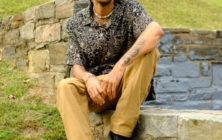
Did you always know you wanted to be a creative and a photographer?
MATTHEW: Subconsciously, I think I’ve always had a connection to art. I remember growing up surrounded by art, especially old family photographs, and I was always enamored by them. From a young age…
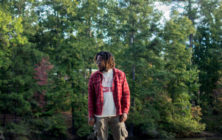
Did you always know you wanted to be a creative and a photographer?
PHILLIP: Honestly, I knew I was an artist as early as I can remember. I’ve moved through different mediums of creative expression though. There’s a photo of me at about four years old playing a toy snare drum. I still have a passion for music, but that’s where this all started…
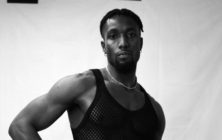
Did you always know you wanted to be a creative and a photographer?
ALEXANDER: Not really. I think it was more so when I started secondary school, which is high school over in the States. With all the subjects that a student normally gets involved with, like math, science, english, and all the other subjects, Art was the one subject that really stood out for me. It was something I enjoyed doing. I felt it was not having to have so much pressure on what you make. That was what I remember really drew me to being into art more when I was younger…
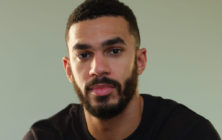
Did you always know you wanted to be a creative and a photographer?
NATE: Yeah. I went back and forth for a long time, but when I was a little kid, I wanted to be an artist. When I was four or five, six years old, I always told people I wanted to be an artist when I grew up, but then I wanted to be a firefighter. I eventually came back to art. I started taking photographs when I was probably about 12 or 13, and from there I just had a little point and shoot that I used to take pictures of my friends and family. I was lucky to go to a high school where we had a darkroom and film processing equipment…
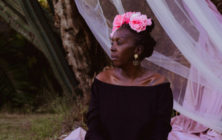
Did you always know you wanted to be a creative and a photographer?
MUMBI: Not a photographer, but I think I always wanted to be a creative. In school I played the flute and I took art classes, but I didn’t have the patience or maybe the people to help me through it. I really feel like I could’ve been a great artist. When I went to college I wanted to do art, music and dance. Those were my three things. My father told me that he’s not wasting his money on no “fru fru” things. I needed to get a job. You know, it’s very strange that he did that because my father kind of had this idea that women were wives, like we didn’t need a career, but still at the same time, he wouldn’t let me do what I wanted to do. I finished college, I struggled with depression the whole time now that I look back on it, and then I lived in the US for a while, just doing odd jobs, not anything serious…